MCAS and Spicy Food: Why Heat Sets Off a Flare
Capsaicin does not raise histamine in your food — it activates the nerves sitting next to your mast cells.
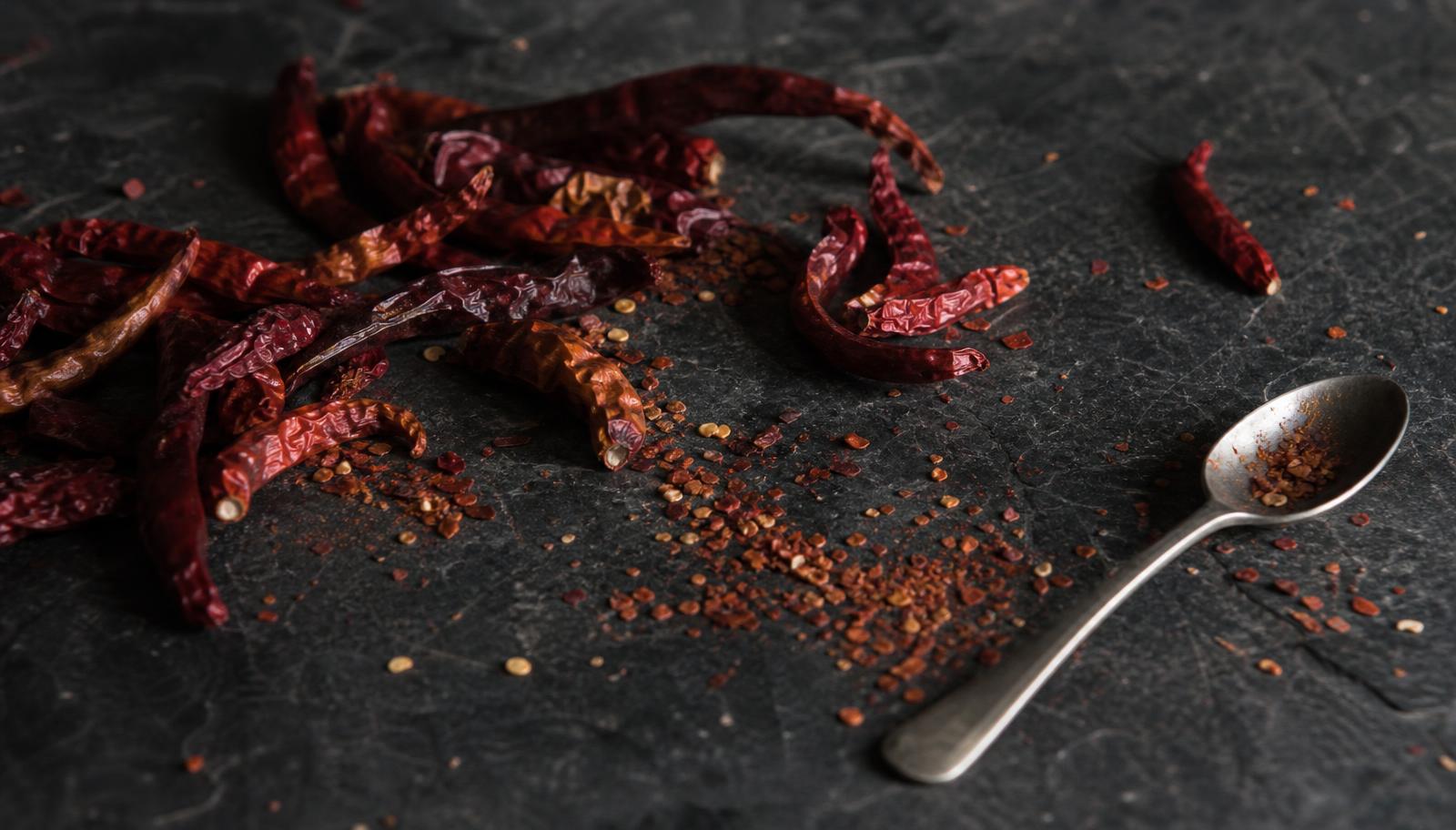
- 01Spicy food triggers flares through nerve activation, not through histamine content.
- 02Capsaicin stimulates TRPV1 receptors on sensory nerves that sit next to mast cells and can prompt release.
- 03Cutting spice does not require cutting flavor — most herbs and aromatics are fine.
- 04A reaction to a curry or salsa may be the sauce ingredients, not the heat itself.
Spicy food comes up constantly in MCAS conversations, and it is one of the few triggers that almost never appears on a low-histamine chart. Patients notice the pattern anyway: flushing, a racing heart, sweating, GI urgency, sometimes itching, within minutes of a spicy meal.
That gap between what the lists say and what patients experience makes people doubt themselves. They should not. The mechanism is real — it is just a different one.
What capsaicin actually does
Capsaicin, the compound that makes chili peppers hot, binds a receptor called TRPV1 on sensory nerve endings. That receptor normally responds to heat and tissue irritation. Activating it releases neuropeptides — substance P and CGRP among them.
Mast cells sit close to those sensory nerves throughout the gut, skin, and airway, and they carry receptors for those same neuropeptides. So a spicy meal can drive mast cell activation through the nervous system without a single milligram of dietary histamine involved.
This is called neurogenic inflammation, and it explains why spicy food, heat, stress, and exercise can all produce a similar-looking flare. They converge on the same pathway.
Why symptoms come on fast
Histamine from food has to be absorbed and overwhelm the DAO enzyme in your gut, which usually takes 20 to 90 minutes. Nerve activation is immediate. If your reaction shows up within a few minutes and centers on flushing, sweating, and heart rate, heat is a likely culprit.
If your reaction shows up an hour or two later and looks more like GI symptoms, headache, or hives, look at the rest of the dish.
The dish is usually more complicated than the spice
Before you write off heat entirely, look at what typically comes with it:
- Tomato base, tomato paste, and sun-dried tomato.
- Fermented ingredients — soy sauce, fish sauce, miso, gochujang, vinegar.
- Aged cheese on top.
- Citrus in the marinade.
- Alcohol in the sauce or in the glass next to it, which blocks DAO.
A restaurant curry can contain four separate triggers. Blaming the chili is often the wrong lesson.
Testing your own threshold
Spice is dose-dependent for most people, so it is worth finding the line rather than banning the category.
- Start from a stable baseline, not during a flare week.
- Test plain, home-cooked food with a small measured amount of black pepper or mild chili, nothing else new on the plate.
- Wait 72 hours before the next test.
- Retest later. Tolerance often improves once mast cell treatment is optimized.
Flavor without heat
Most aromatics are not the problem. Fresh garlic, ginger, turmeric, rosemary, thyme, basil, oregano, cumin, coriander, and fennel are generally well tolerated and do the work of a spicy dish without the TRPV1 activation.
Watch pre-mixed spice blends — they often include chili, and some include preservatives worth avoiding.
When heat is not the only heat
If spicy food triggers you, hot showers, saunas, hot weather, and exercise flushing often do too. That is the same pathway, and it is a useful clue when I am sorting out how much of a patient's picture is mast cell driven versus dysautonomia driven. Those two overlap heavily, and they need different adjustments.
If spicy food is one trigger among many and your list keeps growing, the answer is not a longer avoidance list. It is a proper workup and a stabilization plan.
References
- Gülen T. A Puzzling Mast Cell Trilogy: Anaphylaxis, MCAS, and Mastocytosis. Diagnostics. 2023
- Theoharides TC, Tsilioni I, Ren H. Recent Advances in Our Understanding of Mast Cell Activation. Expert Review of Clinical Immunology. 2019
- Gouin O et al. TRPV1 and TRPA1 in Cutaneous Neurogenic and Chronic Inflammation. Protein & Cell. 2017
- Caterina MJ et al. The Capsaicin Receptor: A Heat-Activated Ion Channel in the Pain Pathway. Nature. 1997
Related care
If this is what you're working through, read more about Complex & Whole-Person Care.
Ready for the conversation?
Have a real visit with Mallory.
Telehealth visits with one clinician, continuity between visits, and no rotating staff.