How You Take Estrogen Matters More Than You Think
The route you choose — patch, pill, gel, or cream — can affect convenience, side effects, and even certain health risks.
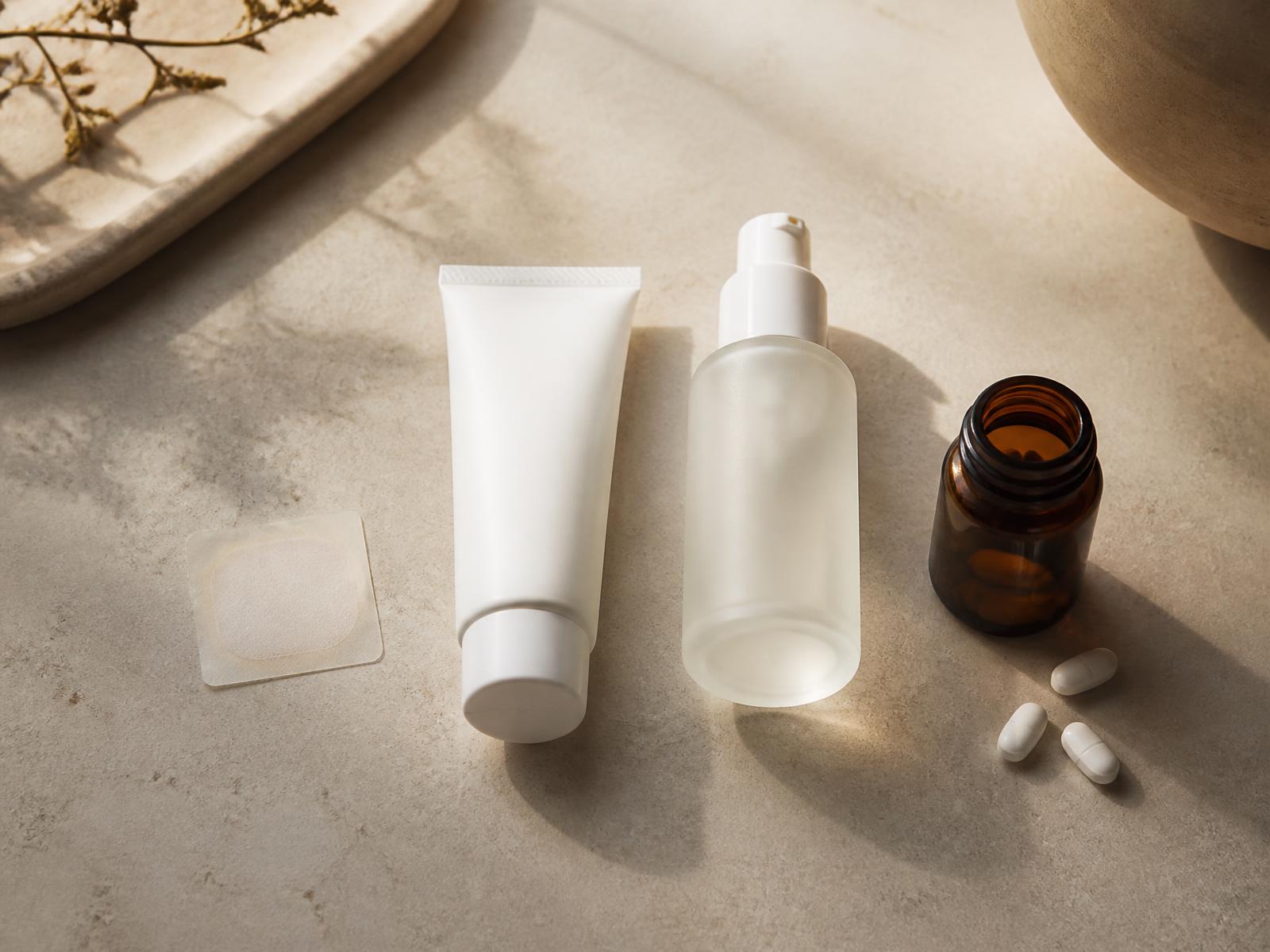
- 01Oral estrogen and transdermal estrogen don't have the same risk profile.
- 02Transdermal estrogen — including patches, gels, and many creams — does not appear to carry the same increased blood clot risk as oral estrogen.
- 03If you still have a uterus and use systemic estrogen, you also need progesterone to protect the uterine lining.
- 04The “best” estrogen isn't the same for everyone. Your medical history, lifestyle, and preferences all matter.
- 05Hormone therapy should be individualized — not chosen based on what's most popular or heavily marketed.
Not all estrogen is the same
One of the biggest misconceptions about hormone therapy is that estrogen is simply estrogen.
In reality, the way estrogen gets into your body matters.
Two women can take the exact same hormone but have very different risk profiles depending on whether it's swallowed as a pill or absorbed through the skin.
That's why I spend so much time talking about delivery methods during hormone therapy consultations.
Why route matters
When estrogen is taken by mouth, it passes through the liver before entering the rest of the bloodstream.
This is called first-pass metabolism.
As the liver processes oral estrogen, it increases production of certain clotting factors and proteins, which is one reason oral estrogen has been associated with a higher risk of blood clots compared with transdermal estrogen.
Transdermal estrogen — meaning estrogen absorbed through the skin — largely bypasses the liver.
Because of that, it does not appear to carry the same increased risk of blood clots seen with oral estrogen.
This difference is one reason I often recommend transdermal estrogen for many women, particularly those with migraine with aura, elevated BMI, cardiovascular risk factors, or a family history of blood clots.
Estrogen comes in several different forms
There isn't one "best" option.
Each has advantages depending on the individual woman.
Estrogen patches
Patches are one of the most common ways to deliver transdermal estrogen.
They typically need to be changed once or twice each week and provide steady hormone levels throughout the week.
Many women appreciate that they don't have to remember a daily medication.
Occasionally patches may loosen with heavy sweating, swimming, or humid weather, and some women develop mild skin irritation where the patch sits.
Estrogen gels
Estrogen gels are applied once daily to clean, dry skin.
Like patches, they avoid first-pass metabolism through the liver.
Many women like that the dose can be adjusted more gradually if needed.
The biggest downside is remembering daily application and allowing the medication to dry before skin-to-skin contact with other people.
Estrogen creams
Some estrogen creams are designed to provide systemic hormone therapy, while others are intended only to treat vaginal symptoms.
These aren't interchangeable, which is why it's important to understand exactly which medication you're using.
For women using systemic estrogen creams, consistency matters.
Applying the medication as directed helps maintain more stable hormone levels and gives us a better idea of whether the dose is working.
Some women love the flexibility of a cream, while others prefer not having a daily application.
Neither approach is inherently better — it's about finding what fits your lifestyle and provides good symptom control.
Oral estrogen
Oral estrogen remains a good option for some women.
It's convenient, familiar, and often less expensive.
However, because it passes through the liver first, it carries a different risk profile than transdermal estrogen.
For women with certain cardiovascular risk factors, transdermal estrogen is often the preferred option.
Vaginal estrogen
Vaginal estrogen deserves its own category because it's used for a different purpose.
Low-dose vaginal estrogen treats symptoms such as:
- Vaginal dryness
- Pain with intercourse
- Burning or irritation
- Recurrent urinary tract infections
- Urinary urgency
Because only minimal amounts are absorbed into the bloodstream, it has a very different safety profile than systemic hormone therapy.
It's important to know that vaginal estrogen does not treat hot flashes or night sweats.
If you have a uterus, progesterone matters
This is one of the most important parts of hormone therapy.
If you still have your uterus and you're taking systemic estrogen, you also need progesterone (or another form of endometrial protection).
Without it, estrogen can stimulate the uterine lining over time and increase the risk of endometrial hyperplasia and cancer.
Depending on the patient, options may include:
- Oral micronized progesterone
- A levonorgestrel-releasing IUD
- Certain combination hormone products
The right choice depends on your symptoms, bleeding history, and preferences.
So how do I decide?
There isn't one formula that works for everyone.
When choosing hormone therapy, I think about things like:
- Your symptoms
- Whether you still have your uterus
- Migraine history
- Personal or family history of blood clots
- Blood pressure
- Cardiovascular risk
- Lifestyle
- Whether you'll realistically remember a daily medication
- Your preferences
For many women, transdermal estrogen is my preferred starting point because of its favorable safety profile.
That doesn't mean it's automatically the right answer for everyone.
Every treatment plan should be individualized.
The bottom line
Choosing hormone therapy isn't just about deciding whether to take estrogen.
It's also about choosing the route that best fits your health, your lifestyle, and your goals.
The good news is that we have more options than ever before.
My goal is to help you understand those options, explain the risks and benefits of each, and work with you to find the treatment that makes the most sense for your individual situation.
Because hormone therapy should never be one-size-fits-all.
References
- Canonico M, et al. Hormone therapy and venous thromboembolism among postmenopausal women: The ESTHER Study. Circulation. 2007;115(7):840-845.
- Vinogradova Y, et al. Use of hormone replacement therapy and risk of venous thromboembolism. BMJ. 2019;364:k4810.
- Stute P, et al. The impact of micronized progesterone on the endometrium: A systematic review. Climacteric. 2016;19(4):316-328.
- Cummings SR, et al. Transdermal versus oral estrogen and stroke risk: A review. Stroke. 2020.
- Jiang X, Bhavnani BR. Pharmacokinetics of transdermal estradiol: Absorption variability and application site. Climacteric. 2019.
- The Menopause Society. 2025 Hormone Therapy Position Statement. Menopause. 2025.
- American College of Obstetricians and Gynecologists. Practice Bulletin: Management of Menopausal Symptoms. Reaffirmed 2024.
Related care
If this is what you're working through, read more about Menopause & Perimenopause Hormone Therapy.
Ready for the conversation?
Have a real visit with Mallory.
Telehealth visits with one clinician, continuity between visits, and no rotating staff.