Hot Flashes and Night Sweats: Why They Happen and What Actually Helps
Hot flashes and night sweats are among the most common symptoms of perimenopause and menopause — and fortunately, they're also some of the most treatable.
- 01Hot flashes happen because changing estrogen levels affect your brain's temperature regulation — not because your body is actually overheating.
- 02The average woman experiences hot flashes or night sweats for 7–10 years, although some women have symptoms for longer.
- 03Hormone therapy remains the most effective treatment, reducing hot flashes by 75–90% in appropriately selected women.
- 04Effective non-hormonal prescription medications are also available for women who can't — or prefer not to — take hormones.
- 05You don't have to just live with it. If hot flashes are affecting your sleep or quality of life, it's worth having a conversation.
"I thought this was just part of getting older."
One of the things I hear most often is:
"I know it's probably just menopause, so I've been trying to deal with it."
Then patients tell me they're waking up soaked several times every night.
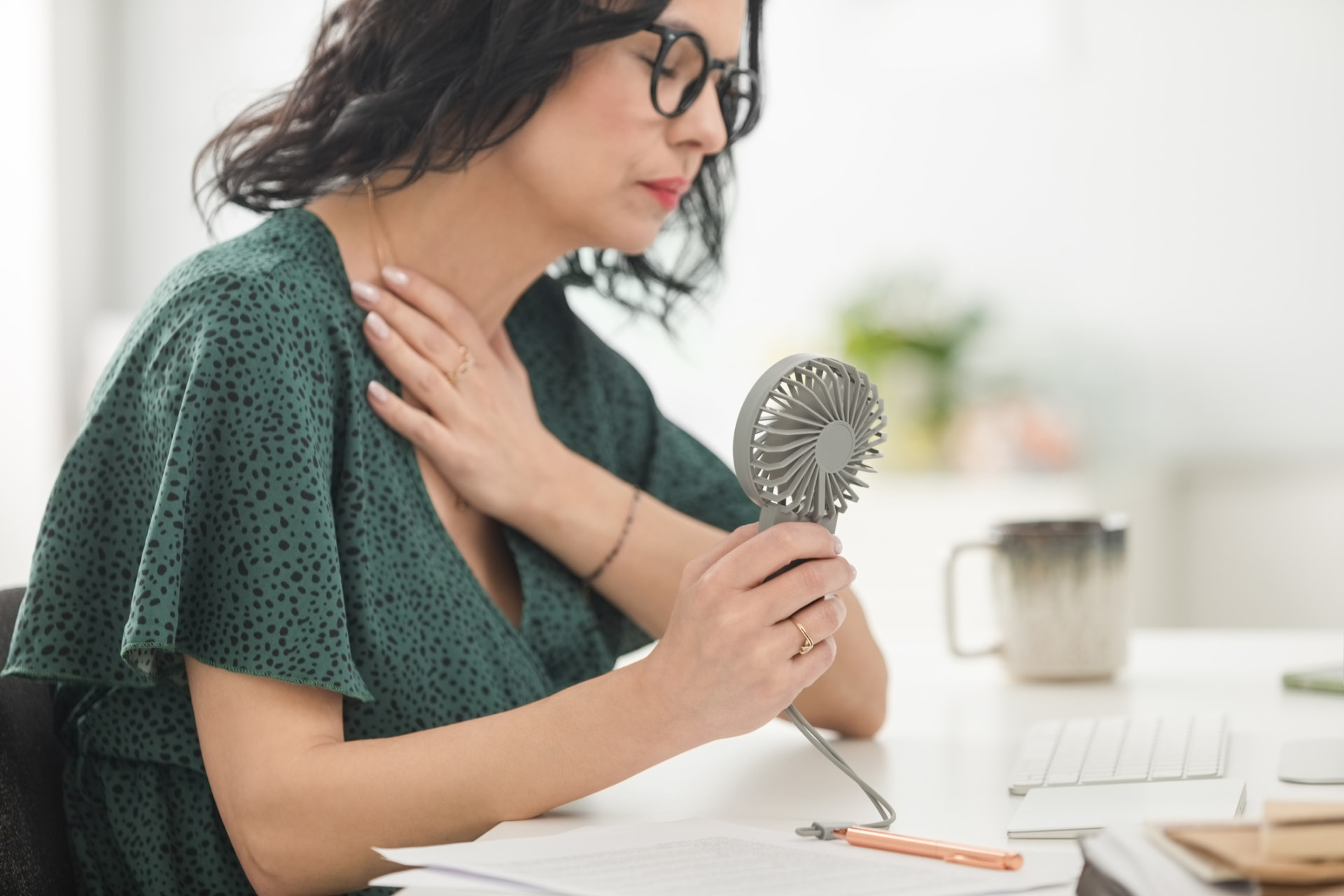
They're sleeping with a fan pointed directly at them.
They're carrying an extra shirt to work.
They're avoiding social events because they're worried about having another hot flash.
That's not something you should simply have to power through.
Hot flashes and night sweats are incredibly common, but that doesn't mean you have to suffer through them.
What actually causes a hot flash?
Many people think a hot flash means your body is overheating.
That's not actually what's happening.
As estrogen levels fluctuate during perimenopause and menopause, the part of your brain that regulates body temperature — called the hypothalamus — becomes much more sensitive.
Think of it like a thermostat that suddenly becomes overly reactive.
Normally, your body tolerates small changes in temperature without much notice. During menopause, even a tiny increase in body temperature can trigger your brain to think you're overheating.
Your body immediately responds by:
- Dilating blood vessels
- Increasing blood flow to the skin
- Producing sweat to cool you down
A few minutes later, many women end up feeling cold because that cooling response worked a little too well.
Your body isn't malfunctioning. It's responding to a thermostat that's become overly sensitive because of changing hormone levels.
How long do hot flashes last?
This is usually the next question. Unfortunately, there's no single answer.
Research shows that the average woman experiences vasomotor symptoms — hot flashes and night sweats — for 7 to 10 years.
Some women improve much sooner. Others continue having symptoms well into their 60s. Women who begin experiencing symptoms earlier in the menopause transition often have them for a longer period of time.
That's one reason I don't like telling someone to simply wait it out.
Waiting a few months is one thing. Waiting several years while your sleep and quality of life suffer is another.
Why night sweats matter
Night sweats aren't just inconvenient. They interrupt sleep, and poor sleep affects almost everything else.
When you repeatedly wake throughout the night, you may notice:
- Fatigue
- Brain fog
- Irritability
- Anxiety
- Increased hunger
- Difficulty losing weight
- Lower energy during the day
Sometimes patients think these are separate problems when they're actually all connected. If we improve your sleep by treating night sweats, many of those symptoms improve too.
What treatments actually work?
The good news is that we have several effective treatment options. The best choice depends on your symptoms, medical history, and personal preferences.
Hormone therapy
For women who are good candidates, hormone therapy remains the most effective treatment we have.
It can reduce hot flashes and night sweats by 75–90% while also improving sleep, vaginal dryness, and many other menopausal symptoms.
For many women, transdermal estradiol (such as a patch) is my preferred starting point because it doesn't carry the same increased risk of blood clots as oral estrogen. If you still have your uterus, progesterone is also needed to protect the uterine lining.
Non-hormonal prescription medications
Hormones aren't the right choice for everyone. Fortunately, they're no longer the only option.
Several prescription medications can significantly reduce hot flashes, including newer medications that work directly on the brain pathways involved in temperature regulation.
Other non-hormonal medications — including certain antidepressants and gabapentin — may also be helpful depending on your symptoms and medical history.
Lifestyle changes
Lifestyle changes alone usually aren't enough for women with severe symptoms, but they can certainly help.
Some simple strategies include:
- Keeping your bedroom cool
- Using breathable bedding
- Dressing in layers
- Identifying personal triggers such as alcohol, spicy foods, or hot beverages
- Limiting caffeine later in the day
- Exercising regularly
- Maintaining a healthy weight
These changes may reduce the severity of symptoms, especially when combined with medical treatment.
Are hot flashes a sign of something else?
Interestingly, research suggests that women with frequent or persistent hot flashes may also have a higher risk of future cardiovascular disease.
That doesn't mean every woman with hot flashes has heart disease. It does mean I see them as an opportunity to talk about overall health.
During these visits, we often review:
- Blood pressure
- Cholesterol
- Blood sugar
- Weight
- Exercise
- Sleep
- Family history
Managing menopause isn't just about treating symptoms today — it's also about protecting your long-term health.
When should you talk to your healthcare provider?
If hot flashes or night sweats are:
- Disrupting your sleep
- Affecting your work
- Interfering with daily activities
- Impacting your mood
- Making you dread bedtime
...it's worth having a conversation. You don't have to wait until your symptoms become unbearable before asking for help.
The bottom line
Hot flashes and night sweats are one of the most common symptoms of menopause — but they aren't something you simply have to live with.
We understand why they happen. We have effective hormonal and non-hormonal treatments. And most importantly, there isn't one right approach for every woman.
The best treatment is the one that fits your symptoms, your health history, and your goals.
If you've been told to buy a fan and be patient, know that there are more options than ever before. You deserve to know what those options are.
References
- Rance NE, et al. Modulation of body temperature and LH secretion by hypothalamic KNDy neurons. Front Neuroendocrinol. 2013;34(3):211-227.
- Avis NE, et al. Duration of menopausal vasomotor symptoms over the menopause transition (SWAN). JAMA Intern Med. 2015;175(4):531-539.
- Johnson KA, et al. Efficacy and safety of fezolinetant in moderate to severe vasomotor symptoms (SKYLIGHT 1 and 2). Lancet. 2023.
- Pinkerton JV, et al. Elinzanetant for vasomotor symptoms (OASIS 1 and 2). JAMA. 2024.
- Carpenter JS, et al. The Menopause Society Position Statement: Nonhormone Therapies for Vasomotor Symptoms. Menopause. 2023;30(6):573-590.
- The Menopause Society. The 2025 Hormone Therapy Position Statement of The Menopause Society. Menopause. 2025.
- American College of Obstetricians and Gynecologists. Practice Bulletin: Management of Menopausal Symptoms (reaffirmed 2024).
Related care
If this is what you're working through, read more about Menopause & Perimenopause Hormone Therapy.
Ready for the conversation?
Have a real visit with Mallory.
Telehealth visits with one clinician, continuity between visits, and no rotating staff.