Why Do My Joints Hurt in Perimenopause?
Joint and muscle pain often appear during the menopause transition, but hormones are only part of the story. Here's what the evidence actually says.
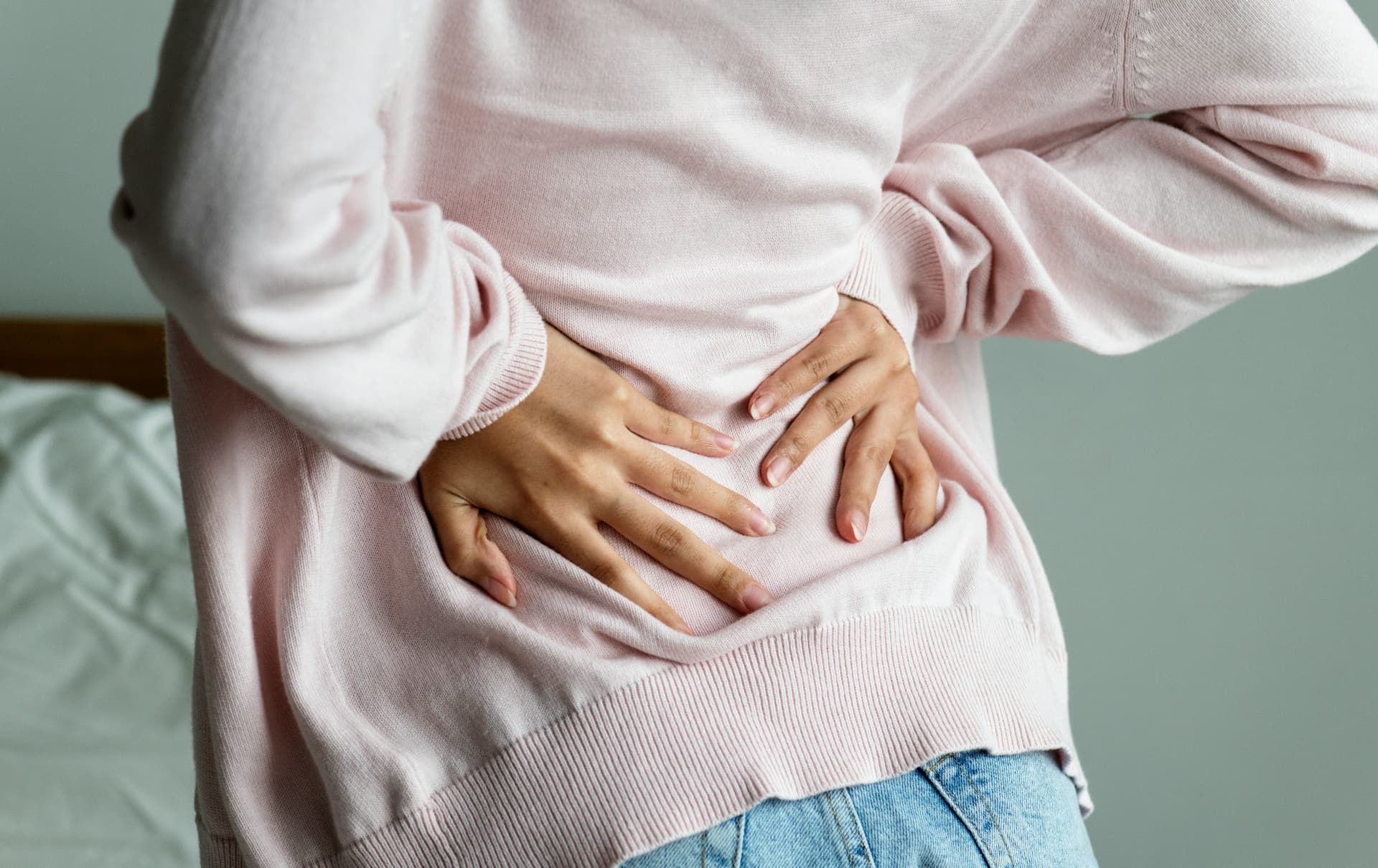
- 01Muscle and joint pain become more common during perimenopause and menopause, but the exact cause in any one person is hard to pin down.
- 02Estrogen receptors exist in muscle, bone, cartilage, and connective tissue, yet menopause overlaps with aging, injuries, and other conditions.
- 03Joint pain alone is not enough to diagnose perimenopause, and it is not a primary indication for hormone therapy by itself.
- 04WHI data suggest hormone therapy may modestly improve joint aches for some women, but broader reviews find no consistent reduction in generalized musculoskeletal pain.
- 05Red flags like joint swelling, prolonged morning stiffness, fever, weight loss, or neurologic symptoms deserve evaluation rather than being blamed on menopause.
- 06Strength training, sleep, bone health, calcium, vitamin D, and recovery matter more than any single supplement marketed for menopause joint pain.
If you entered your 40s and suddenly started waking up with stiff fingers, aching hips, sore knees, painful shoulders, or a body that seems to take longer to recover from everything, you may have wondered:
Is this perimenopause—or am I just getting older?
Joint and muscle pain are recognized symptoms associated with the menopause transition. Current NICE menopause guidance specifically lists joint and muscle pain among menopause-associated musculoskeletal symptoms, and newer research suggests these symptoms become more common as women move from premenopause into perimenopause and postmenopause.
But there is an important second half to that story.
Not every new ache in your 40s or 50s is caused by estrogen.
Hormonal changes may contribute to changes in joints, muscles, connective tissues, bone, sleep, and pain perception during midlife. But aging, injuries, activity level, sleep, metabolic health, inflammatory conditions, thyroid disease, and many other factors can overlap at exactly the same time.
So while the connection between menopause and musculoskeletal symptoms appears real, "it must be my hormones" is usually too simple an explanation.
How Common Is Joint and Muscle Pain During Perimenopause?
Very common.
A 2026 systematic review and meta-analysis evaluated 37 observational studies across 22 countries involving 93,021 women.
Researchers found muscle or joint pain in approximately:
- 40% of premenopausal women
- 57% of perimenopausal women
- 59% of postmenopausal women
Compared with premenopausal women, women in perimenopause had a 35% higher relative risk of reporting muscle or joint pain. Postmenopausal women had a 40% higher relative risk.
An earlier 2020 systematic review found an even higher pooled prevalence—approximately 71% among perimenopausal women—although prevalence estimates varied considerably between studies. It also found that perimenopausal women were more likely than premenopausal women to report musculoskeletal pain.
That variation is important.
Researchers have used different questionnaires, different definitions of menopause stage, and broad terms such as "joint pain" and "muscle pain." The newer 2026 review specifically noted substantial heterogeneity and underreporting of individual musculoskeletal diagnoses.
In other words:
The increase in pain across the menopause transition is supported by evidence. What causes that pain in an individual woman is much less certain.
Why Might Perimenopause Affect Your Joints and Muscles?
The menopause transition involves much more than menstrual periods eventually stopping.
During perimenopause, ovarian hormone production becomes increasingly variable. Estrogen can fluctuate significantly before declining more consistently later in the transition.
Estrogen receptors exist throughout musculoskeletal tissues, and sex hormones appear to influence multiple processes involving:
- skeletal muscle
- bone
- cartilage
- tendons and connective tissue
- inflammatory pathways
- pain perception
Research increasingly supports an interaction between sex hormones and musculoskeletal biology, although the relationship differs depending on the tissue and condition being studied.
A proposed "musculoskeletal syndrome of menopause"
In 2024, researchers proposed the term "musculoskeletal syndrome of menopause" to describe a cluster of musculoskeletal changes occurring around menopause, including arthralgia, loss of muscle mass, declining bone density, and progression of osteoarthritis.
The concept has gained considerable attention.
But it is worth being precise about what it means.
"Musculoskeletal syndrome of menopause" is a recently proposed clinical framework, not a formally established diagnosis or a condition with validated diagnostic criteria.
It may eventually prove useful for recognizing the broader effect of menopause on musculoskeletal health, but it should not be used to assume that every painful joint occurring in midlife is directly caused by estrogen loss.
Estrogen May Affect Pain and Inflammation
Estrogen interacts with inflammatory pathways and nervous-system mechanisms involved in pain processing.
Changing estrogen exposure may therefore alter how pain is experienced in some women.
At the same time, menopause occurs during an age range when osteoarthritis, previous injuries, metabolic conditions, sleep disruption, changes in physical activity, and other contributors to pain become increasingly common.
The challenge is separating those effects.
Muscle Changes Matter Too
Maintaining muscle mass and strength becomes increasingly important during midlife.
Muscle:
- stabilizes joints
- supports the skeleton
- maintains mobility
- protects against falls
- contributes to metabolic health
- helps preserve independence with age
Menopause may contribute to changes in muscle mass and function, although age, exercise, protein intake, illness, sleep, and overall health also matter.
NICE menopause guidance specifically recommends discussing the importance of maintaining muscle mass and strength through physical activity during menopause.
Sometimes what feels like a "joint problem" may actually involve weakness, reduced conditioning, tendon irritation, altered biomechanics, or the tissues surrounding a joint rather than the joint itself.
Tendons and Connective Tissue May Be Part of the Picture
Women commonly describe problems during midlife such as:
- shoulder pain
- plantar heel pain
- Achilles or other tendon pain
- prolonged soreness after exercise
- reduced tolerance for training loads
- stiffness after inactivity
Estrogen may influence collagen metabolism and connective-tissue biology, which has prompted growing interest in its potential role in tendon health.
But this is an area where research is still developing.
There is not enough evidence to label a new tendon injury as "menopause-related" simply because it occurs during perimenopause.
Specific injuries still deserve specific evaluation.
Poor Sleep Can Make Pain Worse
Perimenopause can disrupt sleep through:
- hot flashes
- night sweats
- insomnia
- anxiety
- frequent awakening
- changes in sleep quality
Poor sleep can increase pain sensitivity and interfere with recovery.
That can create a cycle:
poor sleep → greater pain sensitivity → less activity → loss of conditioning → more pain
Treating the broader menopause picture may therefore improve how someone feels even when hormones are not directly "treating the joint."
What Does Menopause Joint Pain Feel Like?
There is no single pattern that identifies musculoskeletal pain as being caused by menopause.
Women may describe:
- aching hands or fingers
- painful knees
- hip discomfort
- shoulder pain
- neck or back pain
- generalized muscle soreness
- morning stiffness
- stiffness after sitting
- feeling unusually sore after exercise
- slower recovery than before
- pain that seems to move between different parts of the body
Some women feel as though their body changed almost overnight.
Others notice a gradual progression over several years.
Unfortunately, research historically grouped many of these complaints together. The 2026 meta-analysis found that specific conditions were substantially underreported, leaving an important unanswered question:
Which musculoskeletal disorders truly become more common because of the menopause transition, and which simply occur during the same years?
Can Joint Pain Tell Me I Am in Perimenopause?
Not by itself.
Joint pain is considered a menopause-associated symptom, but it is not specific enough to diagnose perimenopause.
For otherwise healthy people age 45 or older, current NICE guidance recommends diagnosing perimenopause primarily from symptoms and menstrual-cycle changes, rather than routinely checking hormone levels.
NICE advises diagnosing perimenopause without laboratory testing in otherwise healthy people age 45 or older when they have newly developing vasomotor symptoms along with menstrual-cycle changes. Routine estradiol, AMH, inhibin levels, antral follicle counts, and ovarian-volume measurements are not recommended for diagnosis in this age group.
The reason is simple:
Hormones fluctuate during perimenopause.
A single estradiol or FSH level often cannot tell you exactly where you are in the transition.
Testing can still be appropriate when age, symptoms, menstrual history, or another potential diagnosis makes the picture less straightforward.
What Else Can Cause New Joint or Muscle Pain?
This is one of the most important sections of this article.
Once a woman learns that joint pain can occur during perimenopause, it becomes very easy to attribute every ache to menopause.
Sometimes hormones may be contributing.
Sometimes another condition is responsible.
And sometimes several things are happening simultaneously.
Potential causes can include:
- osteoarthritis
- rheumatoid arthritis
- other inflammatory arthritis
- thyroid disease
- vitamin or nutritional deficiencies
- tendon injuries
- ligament injuries
- overuse
- previous injuries
- fibromyalgia or chronic pain disorders
- autoimmune disease
- medication effects
- sleep disorders
- osteoporosis or fracture
- changes in activity or conditioning
A thoughtful menopause evaluation should therefore expand the differential diagnosis—not eliminate it.
When Should Joint Pain Be Evaluated?
You do not need to panic over every sore joint.
But pain that is persistent, worsening, unexplained, or interfering with normal activity deserves attention.
Particularly important findings include:
Joint swelling
A persistently swollen joint deserves evaluation rather than automatically being attributed to menopause.
Swelling, warmth, redness, or restricted movement can indicate inflammation or another joint disorder.
Prolonged morning stiffness
Morning stiffness can occur for many reasons, but prolonged stiffness—particularly when it affects several joints or accompanies swelling—can raise concern for inflammatory arthritis.
Systemic symptoms
Talk with a healthcare professional if joint pain occurs with symptoms such as:
- unexplained fever
- unexplained weight loss
- marked fatigue
- rash
- significant weakness
- swollen or hot joints
- unexplained anemia
- numbness or progressive neurologic symptoms
Sudden severe pain, inability to bear weight, significant trauma, or an acutely red, hot, swollen joint may require more urgent evaluation.
Does Hormone Therapy Help Joint Pain?
This is where the evidence becomes especially interesting—and where online claims frequently become much stronger than the research supports.
What the Women's Health Initiative found
One of our best-known randomized datasets comes from the Women's Health Initiative.
In a trial involving 10,739 postmenopausal women who had undergone hysterectomy, participants received either conjugated equine estrogen alone or placebo.
After one year, joint pain was reported by:
- 76.3% of women taking estrogen
- 79.2% taking placebo
Joint-pain severity was also modestly lower in the estrogen group, and the difference persisted through year three.
That is evidence of an effect—but it was a small effect, not a dramatic resolution of joint symptoms.
There was another important finding.
At one year, joint swelling was slightly more common in the estrogen group:
- 42.1% with estrogen
- 39.7% with placebo
The difference was statistically significant, although it became weaker after analyses accounting for medication adherence.
That nuance is useful because it demonstrates why estrogen should not be described as a straightforward "joint treatment."
What about estrogen plus a progestin?
The other WHI randomized trial included 16,608 postmenopausal women with an intact uterus who received conjugated equine estrogen plus medroxyprogesterone acetate or placebo.
After one year, women assigned to estrogen plus progestin were more likely to report improvement in joint pain or stiffness than women assigned to placebo:
- 47.1% versus 38.4%
They were also more likely to report improvement in generalized aches and pains:
- 49.3% versus 43.7%
Again, that suggests hormones can influence musculoskeletal symptoms.
It does not establish menopausal hormone therapy as a treatment for arthritis or unexplained joint pain.
What Does the Newer Evidence Say About HRT and Musculoskeletal Pain?
A large systematic review and meta-analysis published in 2026 helps put the WHI findings in perspective.
Researchers analyzed 57 studies involving 3,958,702 participants, including:
- 13 randomized controlled trials
- 17 cross-sectional studies
- 15 cohort studies
- 12 case-control studies
The analysis examined generalized musculoskeletal pain as well as osteoarthritis, rheumatoid arthritis, gout, and carpal tunnel syndrome.
For generalized musculoskeletal pain, pooled analysis found no significant difference between women who had ever used HRT and those who had never used it:
RR 1.00, 95% CI 0.96–1.04.
For osteoarthritis and rheumatoid arthritis, findings were conflicting and too heterogeneous to support firm conclusions.
The practical interpretation is:
Some women may notice improvement in joint symptoms after starting hormone therapy, and randomized WHI data suggest a modest effect is possible. But current evidence does not justify promising that HRT will treat generalized joint or muscle pain.
Should You Start Hormone Therapy Just for Joint Pain?
At present, joint pain alone is not one of the primary established indications for systemic menopausal hormone therapy.
Current menopause guidance strongly supports hormone therapy for appropriate patients with bothersome vasomotor symptoms, and systemic hormone therapy also prevents menopause-associated bone loss and reduces fracture risk.
So consider two different scenarios.
Scenario 1: Joint pain is your only symptom
If otherwise unexplained joint pain is your primary complaint, the priority should be determining why the joint hurts, rather than assuming estrogen is the treatment.
Scenario 2: Joint pain is part of a broader menopause picture
Perhaps you are also experiencing:
- hot flashes
- night sweats
- disrupted sleep
- menstrual changes
- vaginal or urinary symptoms
- other bothersome menopause symptoms
In that situation, systemic hormone therapy might be appropriate for established menopause indications after an individualized discussion of benefits and risks.
If your joints happen to feel better too, that can certainly be a welcome benefit.
But it should not be guaranteed.
What Actually Helps Joint and Muscle Health During Midlife?
There is no single evidence-based "menopause joint pain protocol."
Treatment should depend on what is causing the pain.
But several strategies support musculoskeletal health across the menopause transition.
1. Keep Moving
Pain makes it tempting to stop moving.
Complete inactivity, however, can worsen loss of strength and conditioning.
That does not mean exercising aggressively through an injury.
The goal is finding movement your body can tolerate and progressively building capacity.
Options may include:
- walking
- cycling
- swimming
- strength training
- mobility work
- physical therapy
- appropriately modified exercise
The right choice depends on the problem.
2. Make Resistance Training a Priority
Strength training becomes increasingly important as we age.
Muscle supports joints, protects bone, improves balance, maintains metabolic function, and helps preserve independence.
General adult physical-activity recommendations include muscle-strengthening exercise involving the major muscle groups at least 2 days each week, along with regular aerobic activity.
If pain limits exercise, a physical therapist or qualified clinician may be able to help determine what movements need modification rather than simply stopping activity.
3. Pay More Attention to Recovery
Your body may not respond to exercise at 45 exactly as it did at 25.
That does not mean you need to stop challenging yourself.
It may mean becoming more intentional about:
- sleep
- protein intake
- progressive training
- rest and recovery
- technique
- appropriate training volume
- treating injuries rather than repeatedly working through them
Persistent pain is information.
4. Protect Your Bones
Joint pain and osteoporosis are different problems, but bone health becomes increasingly important during and after menopause.
Estrogen loss accelerates bone loss around the menopause transition.
The U.S. Preventive Services Task Force recommends osteoporosis screening with bone measurement for:
- women age 65 and older
- postmenopausal women younger than 65 who have one or more osteoporosis risk factors and are determined to be at increased fracture risk
Screening decisions for younger postmenopausal women should therefore be based on risk rather than age alone.
5. Get Enough Calcium and Vitamin D
These nutrients matter for bone health, although neither should be presented as a treatment for unexplained joint pain.
Calcium
A reasonable daily calcium target from food plus supplements is approximately:
- 1,000 mg/day for women age 50 and younger
- 1,200 mg/day for women age 51 and older
Food is generally preferred as the primary source when possible.
Vitamin D
The National Institutes of Health Recommended Dietary Allowance for vitamin D is:
- 600 IU (15 mcg) daily for adults through age 70
- 800 IU (20 mcg) daily beginning at age 71
Bone-health organizations commonly recommend approximately 800–1,000 IU daily for adults age 50 and older or for people with osteoporosis or increased fracture risk, although individual needs can vary.
More is not automatically better.
The tolerable upper intake level for most adults is 4,000 IU/day, unless a clinician recommends a higher temporary dose for a specific reason such as treatment of documented deficiency.
And importantly:
Vitamin D supplements do not treat every type of joint pain simply because vitamin D is important for bones and muscles.
6. Treat Sleep as Part of Musculoskeletal Health
If hot flashes or insomnia are leaving you chronically sleep deprived, addressing sleep may help more than you expect.
Pain perception, recovery, mood, fatigue, activity tolerance, and exercise motivation are all affected by sleep.
This is one reason I prefer treating the whole midlife picture rather than asking whether every individual symptom is caused directly by estrogen.
What About Supplements for Menopause Joint Pain?
This is an area where marketing dramatically outpaces evidence.
Supplements commonly promoted for joint symptoms include:
- collagen
- turmeric or curcumin
- glucosamine
- chondroitin
- magnesium
- omega-3 fatty acids
- vitamin D
- various "menopause support" blends
Some have been studied for specific conditions.
That does not mean they have been shown to treat menopause-related joint pain.
Before spending money on a supplement, ask:
- Was it studied for the condition I actually have?
- Was it studied specifically in perimenopausal or menopausal women?
- Was the study randomized and controlled?
- Was the improvement large enough to matter?
- What dose was studied?
- Does it interact with medications?
- Is the product independently tested for quality?
A supplement being labeled "natural" does not establish either effectiveness or safety.
So, Is Your Joint Pain From Perimenopause?
Possibly.
We now have fairly compelling evidence that muscle and joint symptoms become more common as women transition through menopause.
But we still do not have a blood test, scan, or specific pattern of symptoms that can look at your aching shoulder, knee, hand, or hip and tell us:
"This pain is from menopause."
That uncertainty is one of the major gaps remaining in menopause medicine.
A better set of questions is:
- When did the pain begin?
- Where does it hurt?
- Is there swelling or stiffness?
- What else changed around the same time?
- Are there other menopause symptoms?
- And is there another condition that needs to be ruled out or treated?
For some women, musculoskeletal symptoms clearly appear alongside the menopause transition.
For others, evaluation reveals osteoarthritis, inflammatory arthritis, thyroid disease, an old injury, loss of muscle strength, sleep disruption, or another explanation.
And for many women, several factors are probably interacting.
The Bottom Line
Joint and muscle pain are common during perimenopause and menopause.
A 2026 meta-analysis found muscle or joint pain in approximately 57% of perimenopausal women compared with 40% of premenopausal women, supporting a real association between the menopause transition and musculoskeletal symptoms.
Estrogen and other hormonal changes may contribute through effects on muscle, bone, connective tissue, inflammation, and pain processing.
But the science is not yet strong enough to attribute every new midlife musculoskeletal complaint to declining estrogen.
Hormone therapy adds another layer of nuance. Randomized WHI data suggest modest improvement in joint pain with both estrogen alone and estrogen plus progestin, although estrogen alone was also associated with slightly more reported joint swelling. And the much broader 2026 systematic review found no overall reduction in generalized musculoskeletal pain among HRT users.
So the goal should not be to dismiss joint pain as aging—or automatically label it menopause.
The goal is to understand what changed, evaluate what is actually hurting, protect muscle and bone, address sleep and physical activity, consider the full menopause symptom picture, and investigate findings that suggest another diagnosis.
Your symptoms can be connected to perimenopause without every symptom being caused by perimenopause.
That distinction is where good menopause care begins.
References
- Kruse C, McKechnie T, Dworsky-Fried J, et al. Musculoskeletal manifestations of perimenopause: a systematic review and meta-analysis of 93,021 women. JB & JS Open Access. 2026;11(1):e25.00254. doi:10.2106/JBJS.OA.25.00254.
- Lu CB, Liu PF, Zhou YS, et al. Musculoskeletal pain during the menopausal transition: a systematic review and meta-analysis. Neural Plasticity. 2020;2020:8842110. doi:10.1155/2020/8842110.
- Gulati M, Dursun E, Vincent K, Watt FE. The influence of sex hormones on musculoskeletal pain and osteoarthritis. Lancet Rheumatology. 2023.
- Wright VJ, Schwartzman JD, Itinoche R, Wittstein J. The musculoskeletal syndrome of menopause. Climacteric. 2024;27(5):466-472. doi:10.1080/13697137.2024.2380363.
- Chlebowski RT, Cirillo DJ, Eaton CB, et al. Estrogen alone and joint symptoms in the Women's Health Initiative randomized trial. Menopause. 2013;20(6):600-608. doi:10.1097/GME.0b013e31828392c4.
- Brunner RL, Gass M, Aragaki A, et al. Menopausal symptoms and treatment-related effects of estrogen and progestin in the Women's Health Initiative. Obstetrics & Gynecology. 2005;105(5 Pt 1):1063-1073. PMID: 15863546.
- Overton R, Amini P, Chew A, et al. The effect of hormone replacement therapy on musculoskeletal pain in menopausal women: a systematic review and meta-analysis. Post Reproductive Health. 2026;32(1):52-68. doi:10.1177/20533691251403087.
- National Institute for Health and Care Excellence. Menopause: identification and management. NICE guideline NG23.
- U.S. Preventive Services Task Force. Screening for osteoporosis to prevent fractures: US Preventive Services Task Force recommendation statement. JAMA. 2025.
- World Health Organization. WHO guidelines on physical activity and sedentary behaviour. Geneva: World Health Organization; 2020.
- Bone Health & Osteoporosis Foundation. Calcium and vitamin D recommendations.
- International Osteoporosis Foundation. Vitamin D recommendations.
- Evidence and guidelines reviewed through September 2026.
Related care
If this is what you're working through, read more about Menopause & Perimenopause Hormone Therapy.
Ready for the conversation?
Have a real visit with Mallory.
Telehealth visits with one clinician, continuity between visits, and no rotating staff.