Why Am I So Bloated in Perimenopause?
Bloating, constipation, reflux, and bowel changes are common in the menopause transition, but hormones are not always the whole explanation.
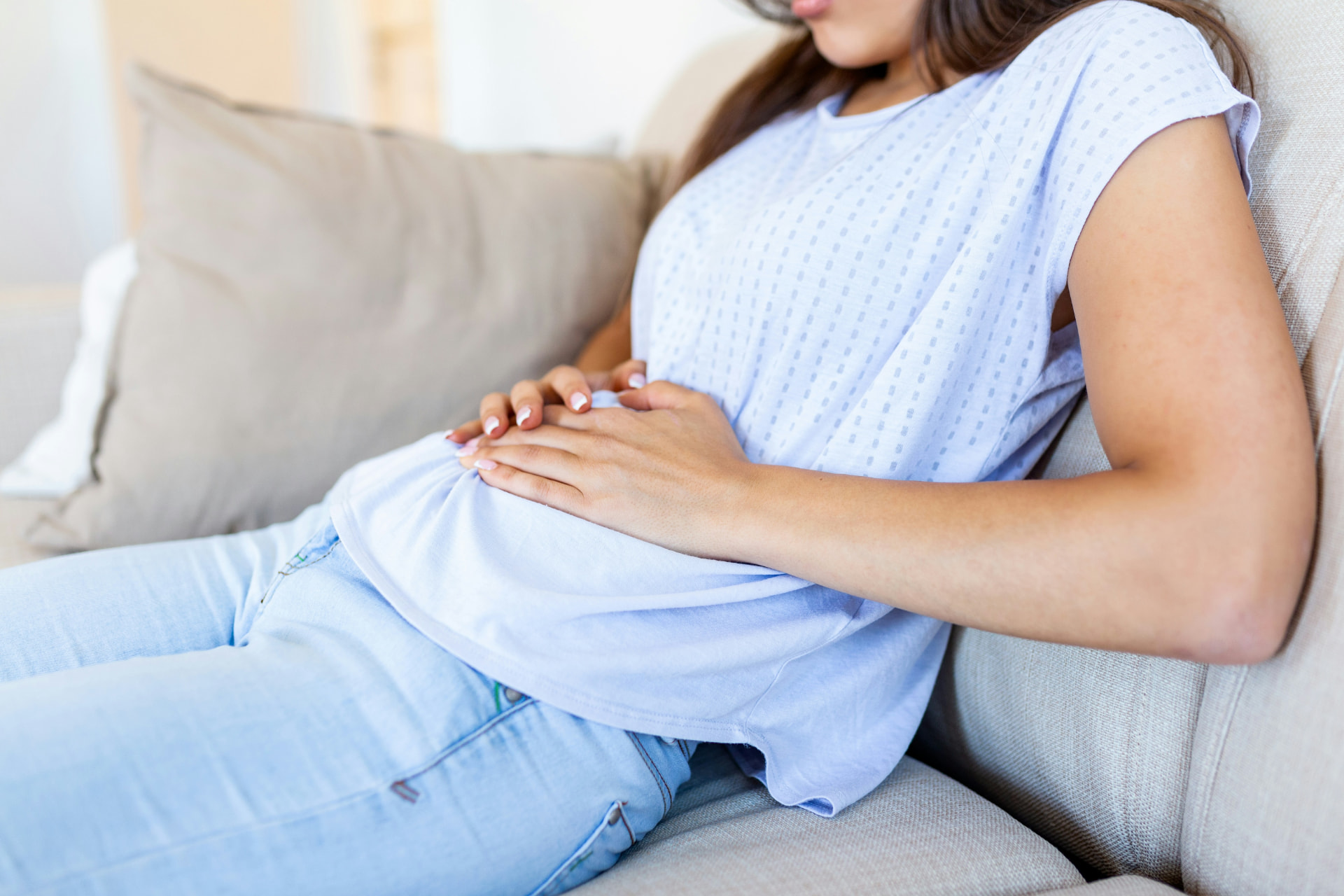
Photo via Unsplash
- 01Bloating, constipation, reflux, and bowel changes are commonly reported during perimenopause and menopause.
- 02Estrogen and progesterone receptors exist throughout the GI tract, but we still cannot blame every midlife digestive symptom on hormones alone.
- 03Research suggests menopause may affect gut motility and microbiome composition, yet high-quality, menopause-specific GI studies remain limited.
- 04Commercial microbiome tests and generic menopause probiotics are not universally evidence based.
- 05Persistent, frequent, or new bloating—especially with early satiety, pelvic pain, or urinary changes—deserves evaluation rather than automatic reassurance.
If bloating, constipation, reflux, gas, or unpredictable bowel habits seem to have appeared out of nowhere in your 40s, you may be wondering:
Can perimenopause really affect my gut?
The answer is increasingly looking like yes—but probably not in the simple way social media makes it sound.
Research suggests that the menopause transition can influence gastrointestinal function, including gut motility and the gut microbiome. Some gastrointestinal conditions may also change in frequency or severity around menopause.
At the same time, this remains an under-researched area of menopause medicine.
A major 2025 review in Nature Reviews Gastroenterology & Hepatology concluded that menopause can affect gastrointestinal function and may alter gut motility and microbiota composition. But the authors also emphasized that relatively few studies have directly examined the effect of menopause on gastrointestinal symptoms and quality of life.
So while your digestive symptoms may have changed around the same time as your periods, sleep, hot flashes, or mood, we should not automatically assume:
“It must be estrogen.”
Sometimes menopause may be part of the explanation.
Sometimes something else is causing the symptoms.
And sometimes several things are happening at once.
Digestive symptoms can be a significant problem in midlife
A study presented at The Menopause Society's 2025 Annual Meeting surveyed nearly 600 women ages 44 to 73.
Among the participants:
- 77% reported bloating
- 54% reported constipation
- 50% reported stomach pain
- 49% reported acid reflux
- 82% reported that digestive symptoms began or worsened during perimenopause or menopause
The study also found that many women felt their digestive symptoms significantly affected their quality of life.
Those numbers are striking, but they need context.
This was a selected UK survey presented at a scientific meeting, not a population-based study designed to determine how common these symptoms are among every woman going through menopause.
So I would not interpret this as: “77% of all women will become bloated during menopause.”
Instead, it tells us something important: GI symptoms may be an underrecognized problem for a substantial number of women during midlife.
What does the larger body of research show?
In 2025, researchers published the first scoping review specifically mapping gastrointestinal-symptom research during natural perimenopause and postmenopause.
They found 122 studies published between 1981 and 2024.
The symptoms studied included:
- constipation
- diarrhea
- nausea
- vomiting
- abdominal pain
- heartburn
- fecal incontinence
- bloating
Constipation was the most frequently studied symptom, appearing in 58 studies, while vomiting appeared in only four.
But there was another striking finding: only 22 of the 122 studies had a primary objective specifically focused on GI symptoms in peri- or postmenopause.
The researchers also identified significant inconsistencies in how menopause stages and GI symptoms were defined and measured, along with major geographic gaps in the research.
That gives us a fairly accurate picture of where the science stands.
We have enough evidence to say: digestive symptoms deserve more attention during the menopause transition.
We do not yet have enough evidence to say: “Your bloating is definitely caused by declining estrogen.”
How could perimenopause affect digestion?
There are several biologically plausible mechanisms.
Estrogen and progesterone receptors exist in the GI tract
Estrogen and progesterone receptors are found throughout the gastrointestinal tract.
These hormones may influence processes including:
- gastrointestinal smooth-muscle function
- intestinal motility
- secretion
- visceral sensitivity
- interactions between the gut and nervous system
- gut microbial composition
And during perimenopause, estrogen does not simply decline steadily. Hormone levels can fluctuate substantially before eventually becoming consistently lower after menopause.
Changing exposure to estrogen and progesterone may therefore influence gastrointestinal physiology.
But exactly how that translates into symptoms such as bloating or constipation in an individual woman is still being investigated.
Menopause does not simply mean your digestion “slows down”
This is worth discussing because it is one of the most common oversimplifications online.
You may have read that: “Low estrogen slows gastric emptying, which causes menopause bloating.”
The actual evidence is more complicated.
One classic physiologic study compared gastric emptying among men, premenopausal women, postmenopausal women, and postmenopausal women taking estrogen plus progesterone.
Researchers found that:
- premenopausal women had slower solid gastric emptying than men
- postmenopausal women not using hormone therapy emptied solids at a rate similar to men
- postmenopausal women taking estrogen and progesterone showed the slower pattern seen in premenopausal women
The investigators concluded that sex steroid hormones may exert variable inhibitory effects on gastric emptying.
But this was a relatively small 1989 physiologic study. And later research has not demonstrated a simple, universal rule that menopause makes the entire GI tract faster or slower.
A randomized study of 49 postmenopausal women, for example, found that short-term estradiol did not significantly alter measured GI transit, while progesterone actually accelerated some measures of colonic transit.
The most accurate way to say it is: sex hormones appear to influence gastrointestinal motility, but those effects vary by hormone, GI region, individual physiology, and study conditions.
So “low estrogen slows your gut” is not an evidence-based explanation for every case of menopause bloating or constipation.
Why might constipation become more noticeable?
Constipation is common, particularly as people age.
Several things can contribute during midlife:
- lower physical activity
- insufficient fiber
- inadequate fluid intake
- medication effects
- pelvic-floor dysfunction
- changes in bowel motility
- medical conditions
- disrupted routines
- changes in diet
Hormonal changes may contribute for some women, but we do not currently have a single menopause-specific mechanism that explains constipation in everyone.
Constipation can cause:
- hard or dry stools
- fewer bowel movements
- straining
- incomplete evacuation
- abdominal fullness
- bloating
If constipation appears for the first time or changes significantly during midlife, it deserves thoughtful evaluation rather than automatically being attributed to menopause.
What about bloating?
Bloating is one of the digestive symptoms most frequently associated with perimenopause.
But it is important to remember: bloating is a symptom, not a diagnosis.
It can occur because of:
- constipation
- irritable bowel syndrome
- intestinal gas
- altered visceral sensitivity
- food intolerances
- celiac disease
- pelvic-floor dysfunction
- medications
- changes in gut motility
- gynecologic conditions
- many other causes
Some women describe primarily a sensation of fullness. Others have visible abdominal distension. And those are not always the same physiologic problem.
Hormonal changes could theoretically alter GI motility or visceral sensitivity enough to make bloating more noticeable. But persistent or progressive bloating deserves particular attention because it can also occur with conditions completely unrelated to menopause.
Why does my stomach look bigger even if my weight hasn't changed much?
Another common question is: “Why does my stomach suddenly look different?”
This often gets grouped together with menopause bloating even though several different processes may be involved.
A larger-feeling abdomen may result from:
- intestinal gas
- constipation
- true abdominal distension
- fluid retention
- increased abdominal or visceral fat
- loss of muscle mass
- changes in body composition
- changes in abdominal muscle tone
- actual weight gain
Menopause is associated with changes in body composition and a tendency toward greater central fat accumulation. That is different from gastrointestinal bloating.
A woman can experience both at the same time. So bloating and “menopause belly” should not automatically be treated as the same problem.
Can perimenopause make IBS worse?
Possibly.
Irritable bowel syndrome is influenced by complex interactions among:
- gastrointestinal motility
- visceral sensitivity
- the gut-brain axis
- stress
- diet
- intestinal microbiota
Sex hormones can interact with several of these systems.
The 2025 Nature Reviews Gastroenterology & Hepatology review notes that pre-existing gastrointestinal conditions may change in symptom severity or quality-of-life impact during menopause, but menopause-specific data remain limited.
If you have longstanding IBS and your symptoms change significantly during midlife, it is still worth reassessing them.
A previous IBS diagnosis should not automatically explain every new gastrointestinal symptom for the rest of your life. This is particularly important when IBS-type symptoms appear for the first time later in life.
Can menopause cause acid reflux?
Some women report new or worsening reflux during midlife.
In the 2025 Menopause Society survey, 49% of participants reported acid reflux. But that does not establish menopause as the cause.
GERD can also be influenced by:
- body weight
- meal timing
- alcohol
- smoking
- medications
- hiatal hernia
- dietary triggers
- lower esophageal sphincter function
So reflux that starts during perimenopause should still be approached like reflux—not assumed to be a hormonal condition.
What about the gut microbiome?
This is probably one of the most fascinating—and most overmarketed—areas of menopause medicine.
The gut microbiome is the enormous community of microorganisms living throughout the gastrointestinal tract.
Research suggests menopause may be associated with changes in gut microbial composition. There is also a biologically interesting relationship between the microbiome and estrogen.
Some intestinal bacteria produce enzymes such as beta-glucuronidases, which can participate in the metabolism and reactivation of estrogen metabolites. The collection of bacterial genes capable of influencing estrogen metabolism is often called the estrobolome.
That has led researchers to explore a two-way relationship: hormones may affect the gut microbiome, and the gut microbiome may affect estrogen metabolism.
It is a legitimate area of scientific research.
But this is where consumer wellness claims often leap much farther than the evidence.
We do not yet know what a “healthy menopause microbiome” looks like
There is currently no validated microbial profile that identifies:
- an ideal menopause microbiome
- estrogen deficiency
- perimenopause
- the cause of hot flashes
- the cause of bloating
- the best diet for a particular woman's menopause symptoms
Microbiomes vary substantially according to:
- diet
- medications
- age
- geography
- genetics
- health conditions
- body composition
- lifestyle
Much of the human evidence remains observational. That means researchers may identify associations between menopause and particular bacteria without proving those bacteria caused a symptom.
So when a product claims: “Fix your estrobolome and balance your hormones,” the marketing is much more definitive than the current science.
Should you take a probiotic for menopause?
There is increasing research into probiotics during menopause. But we still do not have evidence that every perimenopausal woman needs a probiotic, nor do we have a universally proven “menopause probiotic.”
Probiotic effects are often:
- strain-specific
- dose-specific
- condition-specific
That means saying “take probiotics” is not really a complete recommendation.
The more useful questions are:
- Which strain?
- For what condition?
- At what dose?
- For how long?
- What clinical outcome was actually studied?
A product containing a random collection of organisms with the words “hormone balance” or “menopause gut support” on the bottle is not automatically evidence based.
Does hormone therapy fix gut problems?
We do not currently have enough evidence to recommend menopausal hormone therapy specifically to treat bloating, constipation, IBS, reflux, or general digestive symptoms.
Hormone therapy can affect GI physiology, but that does not establish it as a treatment for these conditions.
And hormone therapy itself can sometimes cause digestive-type symptoms. ACOG lists bloating from fluid retention among potential side effects of menopausal hormone therapy.
So if significant bloating begins shortly after starting or adjusting hormone therapy, the timing is worth discussing with your clinician.
Hormone therapy should be prescribed for appropriate menopause indications after consideration of individual benefits, risks, symptoms, medical history, and preferences—not as a generic “gut treatment.”
What actually helps?
There is no universal “menopause gut protocol.” Treatment should depend on what is actually causing the symptom.
If constipation is the problem
Basic measures may include:
- gradually increasing dietary fiber
- adequate fluid intake
- regular physical activity
- reviewing medications and supplements
- establishing regular bowel habits when helpful
According to the National Institute of Diabetes and Digestive and Kidney Diseases, based on Dietary Guidelines recommendations, adults generally need approximately 22 to 34 grams of fiber per day depending on age and sex.
Increase fiber gradually. Going from very little fiber to a high-fiber diet overnight can actually worsen gas, abdominal discomfort, and bloating.
And more fiber is not appropriate for every GI condition. Some people may instead need:
- a fiber supplement
- an osmotic laxative
- prescription medication
- pelvic-floor therapy
- further GI evaluation
The treatment should fit the underlying problem.
If IBS is the problem
IBS treatment varies depending on whether symptoms are dominated by constipation, diarrhea, abdominal pain, bloating, or a combination.
Dietary interventions may include increasing soluble fiber or, in selected patients, trying a structured low-FODMAP diet.
NIDDK notes that soluble fiber appears more helpful than insoluble fiber for overall IBS symptom relief.
But restrictive diets should have a purpose. If you find yourself eliminating gluten, dairy, carbohydrates, fruit, legumes, and numerous other foods simply because you are bloated, it may be time to determine what is actually causing the symptoms instead.
If reflux is the problem
GERD treatment may involve:
- identifying individual triggers
- weight management when appropriate
- smoking cessation
- medication when indicated
- adjusting meal timing
- elevating the upper body for nighttime symptoms
For people with nighttime or lying-down reflux, NIDDK recommends allowing at least 3 hours between eating and lying down or going to bed.
Again, reflux should be treated according to established reflux guidance regardless of whether it appeared during perimenopause.
Should you get a commercial “gut health” or microbiome test?
For most women with routine bloating, constipation, or bowel changes, commercial microbiome testing currently provides more information than clinically actionable answers.
We do not yet have validated menopause-specific microbial targets. So a commercial report telling you that you have low diversity, “bad bacteria,” an imbalanced estrobolome, or too much or too little of a particular organism does not necessarily tell us why you are bloated or what intervention will make you better.
Microbiome science is advancing rapidly. But commercial microbiome testing is not currently a replacement for a medical history, clinical assessment, and appropriate evidence-based testing.
When bloating is NOT something to blame on menopause
This is one of the most important points in this article.
One downside of increased menopause awareness is that we can sometimes swing too far in the opposite direction: every symptom that occurs during perimenopause gets labeled hormonal.
Persistent new bloating should not automatically be attributed to menopause. Ovarian cancer can cause symptoms including:
- bloating or increasing abdominal size
- pelvic or abdominal pain
- difficulty eating
- feeling full quickly
- increased urinary frequency or urgency
ACOG recommends contacting a healthcare professional when these symptoms occur particularly frequently—such as more than 12 days in a month—especially when they are new.
The overwhelming majority of women with bloating do not have ovarian cancer. These symptoms are very common and can result from many benign conditions. But persistent, frequent, new symptoms deserve evaluation.
What about CA-125 and ultrasound?
This part needs nuance because testing recommendations vary by clinical context and country.
For an average-risk woman without symptoms, CA-125 and ultrasound are not recommended as routine ovarian-cancer screening tests. ACOG notes that current screening approaches have not been shown to reduce ovarian-cancer mortality in average-risk asymptomatic women.
That is different from evaluating someone who has persistent concerning symptoms.
For example, NICE updated its suspected-cancer guidance in April 2026. For symptomatic patients age 40 and older, NICE recommends measuring CA-125 in primary care and now uses age-specific thresholds for urgent pelvic and abdominal ultrasound:
- Age 40–49: 35 IU/mL or greater
- Age 50–59: 31 IU/mL or greater
- Age 60–69: 24 IU/mL or greater
- Age 70–79: 25 IU/mL or greater
- Age 80+: 31 IU/mL or greater
If ultrasound findings suggest ovarian cancer, referral to a gynecologic cancer service is recommended.
These are UK NICE guidelines, not a recommendation that every woman in the United States with occasional bloating request CA-125 testing.
The broader principle is what matters: persistent new bloating deserves evaluation—not automatic reassurance that it is menopause.
New IBS symptoms after age 50 deserve attention too
Another important point from the 2026 NICE guidance is that new IBS-like symptoms later in life warrant closer evaluation.
NICE specifically advises appropriate ovarian-cancer testing in people age 50 and older who develop symptoms suggesting IBS for the first time because IBS rarely first presents at that age.
That does not mean new constipation or bloating after 50 is cancer. It means clinicians should avoid automatically applying a new diagnosis of IBS without considering other causes.
Other GI red flags
Talk with a healthcare professional if digestive symptoms occur with:
- unexplained weight loss
- blood in the stool
- black or tarry stools
- persistent vomiting
- vomiting blood
- difficulty swallowing
- painful swallowing
- loss of appetite
- unexplained anemia
- significant persistent abdominal pain
- progressively worsening bowel changes
For reflux specifically, NIDDK recommends medical evaluation for findings such as persistent vomiting, difficulty swallowing, GI bleeding, appetite loss, or unexplained weight loss.
Chest pain also deserves appropriate evaluation rather than automatically being assumed to be reflux.
Could your medications be causing the problem?
Absolutely.
Midlife is also a time when many people begin taking more medications and supplements.
Depending on the individual product, digestive symptoms can be affected by:
- iron
- calcium supplements
- magnesium products
- NSAIDs
- opioid pain medications
- antidepressants
- anticholinergic medications
- antibiotics
- GLP-1 medications
- acid-suppressing medications
- other prescription and over-the-counter products
Some cause constipation. Some cause diarrhea. Some affect gastric emptying. Some can cause reflux or stomach irritation.
If your GI symptoms began after starting or changing a medication or supplement, that timeline is important. Do not stop prescription medication on your own, but make sure your clinician knows everything you are taking.
Do you need a special “menopause gut diet”?
No universal menopause-specific GI diet has been established.
For many people, a generally healthful eating pattern emphasizing vegetables, fruit, whole grains, legumes, nuts and seeds, adequate protein, and minimally processed foods is reasonable for overall gastrointestinal, cardiovascular, metabolic, and musculoskeletal health.
But even good general advice requires context. Someone with gastroparesis, significant pelvic-floor dysfunction, severe bloating, inflammatory bowel disease, or certain bowel disorders may not feel better simply by dramatically increasing fiber.
Nutrition should match the actual condition.
Should you eliminate gluten or dairy?
Not automatically.
Some women genuinely have celiac disease, lactose intolerance, IBS-related food triggers, or another food intolerance. But being in perimenopause does not establish any of those diagnoses.
Removing multiple food groups at the same time can also make it almost impossible to determine which change helped. When food intolerance is suspected, a structured elimination followed by reintroduction is usually more informative than permanently restricting numerous foods without a diagnosis.
Alcohol may affect more than your gut
Alcohol can influence:
- reflux
- bowel habits
- sleep
- appetite
- caloric intake
- hot flashes and night sweats
That makes it relevant when several symptoms occur together. For example, someone experiencing reflux, poor sleep, nighttime hot flashes, and weight changes may find that alcohol is contributing to more than one problem.
That does not mean alcohol is responsible for every symptom. It simply deserves to be considered as part of the whole picture.
Stress and the gut-brain axis are real
Stress does not mean your symptoms are “in your head.”
The gastrointestinal tract and nervous system communicate continuously through the gut-brain axis. Stress can influence:
- motility
- bowel habits
- visceral sensitivity
- pain perception
And chronic GI symptoms themselves can increase stress and anxiety. That two-way relationship may become particularly relevant during perimenopause, when many women are simultaneously dealing with:
- disrupted sleep
- hot flashes
- anxiety or mood symptoms
- work demands
- caregiving
- other major midlife stressors
A complete treatment plan may therefore need to address more than the digestive tract alone.
So, is perimenopause causing your gut symptoms?
Possibly.
There are biologically plausible reasons why changing sex hormones could affect gastrointestinal function. Research increasingly supports relationships among menopause, gastrointestinal motility, microbiome composition, and some GI disorders.
But we still cannot look at someone's bloating, constipation, diarrhea, or reflux and confidently say: “This is from low estrogen.”
A better approach is to ask:
- When did it start?
- What exactly changed?
- Is it intermittent or persistent?
- Did your diet change?
- Did you start a new medication?
- Did your activity level or weight change?
- Are you experiencing other signs of perimenopause?
- Are there any symptoms that suggest something else needs evaluation?
That approach allows us to acknowledge that menopause may be contributing without allowing menopause to become a catch-all diagnosis.
The bottom line
Digestive symptoms including bloating, constipation, abdominal discomfort, and reflux are commonly reported during perimenopause and menopause. Emerging evidence supports several potential connections.
- Estrogen and progesterone receptors are present throughout the gastrointestinal tract.
- Sex hormones can influence GI physiology.
- The menopause transition may affect gut microbial composition.
- And pre-existing gastrointestinal conditions may change during this stage of life.
But there are still major evidence gaps. We do not currently have:
- a validated diagnosis of “menopause gut”
- one predictable pattern of GI motility during menopause
- an ideal menopause microbiome profile
- a validated estrobolome test for routine clinical care
- a universally proven menopause probiotic
- evidence that hormone therapy should be prescribed as a general treatment for bloating, IBS, constipation, or reflux
- proof that every new GI symptom occurring during midlife is hormonal
And that distinction matters.
Menopause awareness should help women get better care. It should not cause new symptoms to be dismissed.
Your gut may change during perimenopause. But persistent bloating, major changes in bowel habits, significant reflux, unexplained weight loss, bleeding, early satiety, pelvic or abdominal pain, or other concerning symptoms still deserve a proper evaluation.
Menopause can be part of the explanation without being the only explanation. And sometimes the most important question is not “Is this menopause?”
It is: “What else do we need to make sure we're not missing?”
This article is for educational purposes only and is not a substitute for individualized medical advice, diagnosis, or treatment.
References
- Ley D, Saha S. Menopause and gastrointestinal health and disease. Nature Reviews Gastroenterology & Hepatology. 2025;22:556-569.
- The volume and characteristics of research on gastrointestinal symptoms in “natural” peri- and postmenopause: a scoping review. Women's Health. 2025. PMID: 41143477.
- The Menopause Society. Digestive health issues more common during perimenopause and menopause. Presented at The Menopause Society 2025 Annual Meeting. October 2025.
- Hutson WR, Roehrkasse RL, Wald A. Influence of gender and menopause on gastric emptying and motility. Gastroenterology. 1989;96(1):11-17. doi:10.1016/0016-5085(89)90758-0.
- Gonenne J, Esfandyari T, Camilleri M, et al. Effect of female sex hormone supplementation and withdrawal on gastrointestinal and colonic transit in postmenopausal women. Neurogastroenterology & Motility. 2006. PMID: 16961694.
- Ervin SM, Li H, Lim L, et al. Gut microbial β-glucuronidases reactivate estrogens as components of the estrobolome that reactivate estrogens. Journal of Biological Chemistry. 2019.
- Li Z, Zheng Y, Shen F, Zhou X. Sex hormones and functional gastrointestinal disorders in menopausal women. Frontiers in Endocrinology. 2025. PMID: 41953700.
- National Institute of Diabetes and Digestive and Kidney Diseases. Eating, diet, & nutrition for constipation. (niddk.nih.gov)
- National Institute of Diabetes and Digestive and Kidney Diseases. Eating, diet, & nutrition for irritable bowel syndrome. (niddk.nih.gov)
- National Institute of Diabetes and Digestive and Kidney Diseases. Eating, diet, & nutrition for GER & GERD. (niddk.nih.gov)
- American College of Obstetricians and Gynecologists. Hormone therapy for menopause. (acog.org)
- American College of Obstetricians and Gynecologists. Ovarian cancer. (acog.org)
- National Institute for Health and Care Excellence. Suspected cancer: recognition and referral. NICE guideline NG12. Updated 2026. (nice.org.uk)
- National Institute for Health and Care Excellence. Ovarian cancer. Quality standard QS18. Updated April 2026. (nice.org.uk)
- Evidence and guidelines reviewed through September 2026.
Related care
If this is what you're working through, read more about Menopause & Perimenopause Hormone Therapy.
Ready for the conversation?
Have a real visit with Mallory.
Telehealth visits with one clinician, continuity between visits, and no rotating staff.